
by Olivia Maynard @OliviaMaynard17
This blog originally appeared on the Mental Elf site on 6th July 2015.
While bereavement can occur at any point during the lifespan, it is much more common later in life and is a risk factor for both poor physical and mental health.
While the Mental Elf has blogged previously about the impact of childhood bereavement on mental health, the impact of bereavement on the health of older people can be even more severe, given the ongoing declines in health as a result of their age.
Due to the high prevalence of bereavement in this age group, understanding how bereavement leads to declines in health among older adults is important. Behavioural changes may partially account for these negative health outcomes.
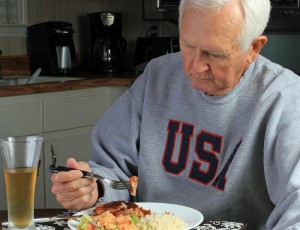
To examine this, Stahl and Schulz (2014) conducted the first systematic review to examine the relationship between bereavement and five routine health behaviours:
- Physical activity
- Nutrition
- Sleep
- Alcohol use
- Tobacco use
As well as one modifiable risk factor associated with health:
- Body weight
Methods
The authors searched databases to find 34 studies which met the following criteria:
- Quantitative and qualitative studies with either observational or intervention-based designs;
- Older adults (aged over 50 years) who had experienced the death of a spouse;
- Health behaviours were assessed.
Results
Physical activity
18 studies: 4 cross-sectional, 8 prospective longitudinal, 5 post-bereavement longitudinal
- Physical activity was assessed using self-report in all studies and physical activity ranged from social activities such as visiting friends to sports activities.
- As a result, the evidence was mixed, with bereavement increasing the prevalence of social activities, but decreasing the prevalence of sports. Furthermore, while this pattern applied to bereaved women, bereavement decreased all forms of physical activity among men.
Nutrition
12 studies: 5 cross-sectional, 5 prospective longitudinal, 3 post bereavement longitudinal
- Nutrition was assessed using a range of self-report questionnaires.
- There was consistent evidence for a strong relationship between bereavement and increased nutritional risk, including worse nutrient intake and poor dietary behaviours, particularly within the first year of bereavement.
Sleep quality
9 studies: 1 cross-sectional, 0 prospective longitudinal, 8 post-bereavement longitudinal
- Sleep quality was assessed using both self-report and objective measures such as electroencephalography and actigraphy (measurement of movement using small body sensors).
- While the self-report studies consistently showed strong support for a link between bereavement and poorer sleep quality, no relationship was observed when sleep disturbance was measured objectively.
Alcohol consumption
7 studies: 2 cross-sectional, 3 prospective longitudinal, 2 post-bereavement longitudinal
- There was moderate evidence (from longitudinal studies only) that bereavement was associated with increased self-reported alcohol consumption, for both men and women.
Tobacco use
7 studies: 2 cross-sectional, 4 prospective longitudinal, 1 post-bereavement longitudinal
- Smoking status and frequency of tobacco use was assessed using self-report.
- There was inconsistent evidence for the impact of bereavement on smoking behaviour, with bereavement reducing smoking frequency among current smokers (particularly men) but increasing the likelihood of smoking initiation among female non-smokers.
Weight status
6 studies: 1 cross-sectional, 5 prospective longitudinal, 0 post-bereavement longitudinal
- There was consistent evidence across the studies that bereavement led to unintentional weight loss among both men and women.

Limitations and directions for future research
- The studies were heterogeneous and many did not report effect sizes, meaning that quantitatively assessing them (i.e. using meta-analysis) was not possible.
- The majority of studies used self-report which may be affected by recall bias. For studies exploring sleep quality, only those which used self-report, rather than objective measures observed a negative effect of bereavement.
- Few of the longitudinal studies reported the length of the bereavement period or when assessments were taken. Precise information on measurement intervals is important in determining when behavioural changes are most likely to occur and would be important for treatment.

Discussion
This systematic review observed:
- Strong support for changes in nutrition, sleep quality and weight status after bereavement
- Moderate evidence for an impact on alcohol consumption
- Mixed evidence for effects on physical activity and tobacco use
Although this review did not explore why bereavement led to these changes in health behaviours, the authors provide a number of explanations, which should be examined in future studies:
- Loss of social support and the onset of depression and grief. This may reduce motivation to engage in health-promoting behaviours such as physical activity and also exacerbate or trigger physical symptoms such as poor sleep and headaches.
- Changes in daily routines. Previously shared activities, such as exercise, food preparation or sleeping, may be difficult to maintain following spousal loss.
Crucially, however, this review is only one part of the puzzle. While it shows us that bereavement is associated with changes in health behaviours, we don’t know whether these changes mediate the relationship between bereavement and physical and mental health, the key outcome we’re interested in.
Given the known health burden associated with bereavement, it is critical that we further investigate this link and if this link were observed, interventions could target health behaviours to reduce the impact of bereavement on physical and mental health.
Links
Primary paper
Stahl ST, Schulz R. (2014) Changes in routine health behaviors following late-life bereavement: A systematic review. Journal of Behavioral Medicine, 37, 736-755.
– See more at: http://www.nationalelfservice.net/mental-health/are-changes-in-routine-health-behaviours-the-missing-link-between-bereavement-and-poor-physical-and-mental-health/#sthash.QRsZgV2E.dpuf
























 Nine months later I was on my way to Heathrow for a two month stint collecting data on a cannabis administration study. I was both excited and apprehensive. I have never lived more than a 3 hour drive away from family, and have always been in a city where I have known people. I didn’t know whether I would get homesick, or whether I would make friends on my trip abroad. These feelings of apprehension soon disappeared in the first few hours of my first day at the New York Psychiatric Institute. Everyone I met was so friendly and welcoming, even the many morning commuters who stopped to help the lone Brit who was obviously puzzled by the subway map at 7.30am.
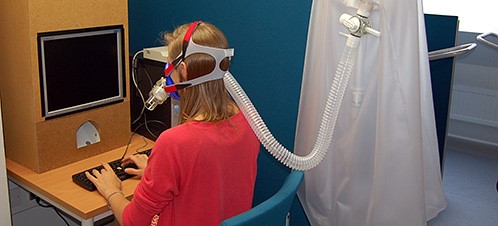
 I was to spend the next six weeks collecting data for a study examining the neuro-behavioural mechanisms of decisions to smoke cannabis at the Substance Use Research Center in the New York Psychiatric Institute at Columbia University. This research centre is unique; it is one of the largest drug administration centre in the world and has licenses to administer a wide variety of drugs, including cannabis, cocaine and heroin. This means that much of the research conducted here is cutting edge. The aim of the study that I would be working on was to shed light on how and why drug abusers repeatedly make decisions to take drugs despite substantial negative consequences. The study used brain imaging (fMRI) to examine the neural and behavioural processes involved in decisions to self-administer cannabis, compared to decisions to eat food, in regular cannabis users. We also examined the influence of drug and food cues on the processes underlying these decisions. To do this, participants were recruited as inpatients and stayed with us in the lab for a week. Data collection for this study is still ongoing, but I will be sure to write another blog post with what we found when the results are available.
 I found this research fascinating and it was a pleasure to be involved in the work carried out in this department. The experience was made even more enjoyable by the people I was working with. There were many office conversations about the British and American slang that was being used, many lunchtime trips to Chipotle (an American fast food restaurant that I am definitely missing since my return to the UK), and several Friday evening trips to the local Irish bar. One office memory that will always stick in my mind was meeting a very accomplished researcher in the field of my PhD, a researcher that was definitely someone I should be impressing. Upon entering this individuals office on an extreme
 I did, of course, take every opportunity to explore New York. I was lucky enough to get tickets to watch the New York Yankees beat the Boston Red Sox at the Yankee Stadium, which was also one of the last games played by baseball-legend Derek Jeter. I made several trips to the American Natural History Museum (my favourite type of museum, and this one cannot be done in a day), and while there saw a live spider show, a 3D film about Great White Sharks and a full T-Rex skeleton. The glorious weather allowed for several leisurely strolls around Central Park. And, of course, the American food definitely needs a mention. If anyone reading this takes a trip over the Atlantic, I would definitely recommend visiting Big Daddy’s Diner for what could be the best milkshake on the planet. And don’t be shy about trying a hotdog from one of the carts that can be found on nearly every street corner. The reason there are so many of them is that they’re delicious! I would also recommend a trip to the Russian Tea Rooms for caviar afternoon tea, an evening at the New York Metropolitan Opera (if that’s your cup of tea), and a trip to Coney Island.
 Although it was daunting going abroad for that length of time to begin with, I don’t think I would be having those feelings again and I would definitely jump at any opportunity to work in a different environment in the future. I am very grateful that I am a PhD student in a large working group like TARG, as without this I probably would not have come across opportunities such as this one. This experience has taught me the importance of inter-disciplinary research, and the need for several fields contributing evidence to a much larger research question. Since this trip, I have been successful in a fellowship application allowing me 9 months in a different department at the University of Bristol, an application that I probably would not have made if it wasn’t for my experience at the Columbia University. I am an epidemiologist and do not have any plans to change that; however I do plan to conduct more interdisciplinary research in the future. I would like to that Gill (and everyone in her lab group) for welcoming me and making this trip possible. I look forward to hopefully working with you again in the future…